Can Kids With Autism Have Trouble Reading
Introduction
The autism spectrum disorder (ASD) has been recognized every bit the fastest growing developmental inability with 1 in 88 children diagnosed having ASD (ane). People with ASD experience a range of language deficits, which accept a life-long impact on their psychosocial performance (2). These deficits include difficulties in comprehension of spoken language and writing, specially misinterpreting and understanding complex instructions (3). Although individuals at the higher end of the autistic spectrum announced to take good reading abilities, several studies have shown that these individuals have difficulties in different components of written language comprehension. For instance, they fail to make inferences virtually social scripts and understand metaphors, which interfere with successful social advice (4). Many individuals with ASD are unable to derive the gist or significant of written documents (v–seven). Studies show that people with loftier-operation ASD have excellent phonetic decoding (power to capture the meaning of unfamiliar words by translating groups of letters back into the sounds that they correspond, link them to ane'due south verbal vocabulary, and admission their meaning) simply poor comprehension (6, 8, 9). Similar results were reported past Huemer and Mann (10) who compared reading accuracy with reading comprehension in a population with ASD. This study found that error patterns observed in the participants suggested that children with ASD are more focused on accurately decoding text than on preserving the meaning of the passage. This was supported in some other study where readers with ASD were proficient at decoding sounds but had poor comprehension (eleven). These findings also support the testify that the skill in both decoding and linguistic comprehension is necessary if skill in reading is to advance (12). In addition, people with ASD are not able to employ their groundwork knowledge to construct an understanding of text (13).
Traditionally, the difficulty with reading comprehension has been related to the cognitive contour of these readers especially with their problems to comprehend the perspectives of others (14). Saldana and Frith (15) have establish that people with ASD have difficulty with inferences, which appear to exist greater in text with social content and advise that these difficulties may be related to mentalizing deficits and could also influence other reading processes such as referential inferences or attributions of authors' aims. Furthermore, comprehension difficulties take been associated with differences in linguistic information processing causing a negative bear on in the metaphor comprehension (16).
Several bug with the businesslike aspects of linguistic communication have been constitute among people with ASD (16, 17). For instance, Dennis et al. (4) studied the different ability to understand pragmatic inferences most given or presupposed knowledge in mental state words. This study confirmed that children with loftier-functioning ASD struggle to understand metaphors and make inferences about social scripts. These results are as well consequent with those of Beversdorf et al. (18) who showed that people with high-performance ASD recollect less of emotional sentences than nonemotional ones. On the other hand, contempo evidence advise that the chance for reading comprehension difficulties is a specific characteristic of the social-advice phenotype of many loftier functioning ASD children and adolescents (19–22).
Although there is an abundance of research on reading difficulties for children with autism, at that place seems to be a considerable gap in investigation of this upshot beyond adolescence. Nevertheless, a few studies that address language disorders in adults with autism signal that, although reading accurateness improves with age in high functioning children with autism, they proceed to struggle with many linguistic phenomena such every bit homographs, multiple meaning words, phrases, and metaphors (ten).
To the knowledge of the authors, there are no reading comprehension interventions tested among adults with autism, and there are very few studies involving adolescents. In a recent review near reading comprehension interventions for school-aged children and adolescents with ASD (23), 12 studies were identified, 3 using treatment comparing designs and 8 using single-case designs. These interventions included strategy educational activity (24–27), explicit instruction (28–30), and anaphoric cueing (half dozen, 31). None of these interventions accept been tested using an experimental pattern or including a large sample. Withal, these interventions were time consuming and required a facilitator, which increased the toll of the intervention (23). The field of reading interventions for people with ASD had followed the enquiry involving students with reading difficulties in full general (32, 33), and virtually of the interventions tested for students with ASD accept included reading expert recommendations (34). However, it seems that there is loftier need for research-based knowledge to enhance reading comprehension performance in people with ASD, specially amidst older adolescents and adults (23).
Assistive engineering has been used to enhance communication and academic skills for children with disabilities (35, 36). The use of technology to teach several academic and social skills to students with ASD has a long history, since the kickoff study reporting the use of a computer to increment agreement of how messages and sounds form words, and how texts can form expressions (37, 38). Still, very few studies have explored or tested the use of assistive technology to facilitate reading comprehension among ASD subjects (39).
The assistive tool tested in this written report was developed in the projection First (Flexible Interactive Reading Back up Tool) by a multinational group of interdisciplinary researchers that involved collaboration between clinical, machine-learning, and Natural Linguistic communication Processing (NLP) experts in the UK, Spain, and Bulgaria. Nosotros adjusted Language Technologies resources to design a organization called Open Book in three languages—English, Spanish, and Bulgarian. Further details of this project tin exist establish in previous publications (40–42).
Open Book is a noncommercial electronic platform that can be personalized to meet and support the specific reading needs of people with autism. It uses Tongue Processing (NLP) to brand documents for people with autism more attainable. Some of the processes utilized by Open Book include the following: detection of linguistic communication obstacles in the text; adding definition to terms or exceptional (rare) words; calculation images to words in order to aid give-and-take visualization; providing synonyms for infrequent words; providing options to modify text format (e.chiliad., background colour, text color); and "magnify" feature which highlights particular sentence to ease focusing users' attention and back up when following specific text sections. This approach is supported by several studies saying that text comprehension depends on understanding words and integrating their significant into a mental model of the text (43–45).
Open Volume tin convert a standard document into a personalized and simplified version, which was hypothesized that it would be easier to understand. Another feature of the platform is that it encompasses 2 different interfaces—for independent users with autism and for caregivers such equally parents or teachers. The Open up Book contained user can benefit from assistive elements using features such as "Explicate discussion," "Explicate with image," "Provide summary," or "Enquire caregiver" to make the text clearer. The program also simplifies circuitous text structures by shortening long sentences and clarifies ambiguities. Non relying purely on textual changes, the conversion software also provides illustrative pictures to selective words and offers concise document summaries.
The interface designed for caregivers provides them with a semiautomatic program where they cannot only convert text using the NLP technologies implemented in the software just tin also make their own editions to the text. They can upload images, review texts from their user's library, propose other back up if needed, and/or create new documents. All the documents are collected in the user's personal library, which can be bundled with different folders and labels. A privacy function allows the user to keep select documents private and not share them with their caregiver.
The initial software prototype was produced in English, Spanish, and Bulgarian.
The aim of this study was to appraise the accessibility, utility, and the effectiveness of Open up Book in simplifying complex texts by making them easier to sympathise for adolescents and adults with loftier-performance ASD in U.k., Bulgaria, and Spain.
The hypothesis was that texts simplified through Open Volume would be easier to embrace compared to original texts for participants with ASD. Information technology was expected that, when participants were tested about written texts' comprehension, they would give more than correct responses on the simplified texts compared to original (non-simplified) documents. It was likewise hypothesized that participants would blindly rate simplified texts equally easier to encompass compared to original texts.
By improving admission of people with autism to written information, we ultimately aim to facilitate their empowerment and social inclusion. Open Book is expected to help individuals with autism to increase their independence by improving access to the wealth of textual information that is available in the information society.
Textile and Methods
Written report Design
Crossover design was used to test (46–48) the effectiveness of Open Volume to improve reading comprehension amongst adolescents and adults with autism spectrum disorder.
Participants
All participants who met the post-obit criteria were included in the report: a) a formal ICD-10 diagnosis of ASD based on diagnostic clinical interview conducted by psychiatrists or clinical psychologists; b) 12–17 years old in the adolescents branch of the written report undertake in Kingdom of spain and Republic of bulgaria, and ≥18 years sometime in the adult branch of the study carried out in the UK and Spain; and c) a score of ≥seventy in a measure of an intelligence test confirmed by clinical records. The study exclusion criteria were every bit follows: a) not native speakers of the respective languages, i.e., English language, Spanish, and Bulgarian; b) documented history of learning disabilities; c) additional diagnosis of dementia or other organic brain disorder that could impact retentivity; and d) presence of a sensory impairment that could forbid reading, writing, or hearing.
Ethical Blessing
All report procedures were in accordance with the ethical standards of the respective institutional and/or national research committees and with the 1964 Helsinki announcement and its subsequently amendments or comparable ethical standards.
Full ethical approval for the project was sought and received from each eye separately.
In the UK, full ethical approval was sought and received by Eastward of Scotland Research Ethics Service (ref: 13/ES/0059). Separate ethical approvals were likewise received past local Research and Evolution teams from each NHS site that participated in recruitment.
In Bulgaria, Parallel World received blessing from the Ethical Commission of Plovdiv University St. Paisii Hilendarski. In add-on, for the control grouping, permissions were received from the school direction where the tests were conducted. Parallel World is a Registered Administrator of Personal Data according to the Bulgarian Law for Protection of the Personal Data.
In Spain, consultations were conducted following internationally accepted ethical regulations, the legal normative applicable, and the Good Clinical Practice standards (CPMP/ICH/135/95). The guidelines of investigation compatible with those suggested by the American Psychological Association for investigations involving human participants were likewise followed.
The procedure for obtaining participant informed consent was in accordance with the REC guidance and GCP. All participants provided written informed consent. The decision regarding participation in the project was entirely voluntary. The inquiry worker emphasized to participants that consent regarding projection participation could be withdrawn at any time without punishment or affecting the quality or quantity of their future medical intendance, or loss of benefits to which the participant was otherwise entitled. No project-specific testing was done before informed consent had been obtained.
The informed consent forms were signed and dated by all potential participants/parents before they entered the project. The research worker explained the details of the project and provided a participant information sheet, so immune participants to consider whether they liked to be involved in the project. The research worker encouraged the participant to ask whatsoever questions that could assistance them brand a conclusion on their potential involvement in the project.
Informed consent was collected from each participant before they underwent the reading comprehension test, including history taking related to the project. Ane copy of the informed consent class was kept by the participant, while the other was kept by the research worker and was retained in the projection Master File.
The study was granted by the FP7 EU Grant for Social Inclusion.
Sample Size
The sample size adding was based on the precision with which we will exist able to estimate the proportion of participants who adopt the simplified text. Based on a clinical assumption that 80% of people with ASD would adopt the simplified text, and using a confidence level of 95%, a sample of 100 participants would let us to have 80% power to gauge the true proportion that prefer the simplified text of between 72 and 88%.
Recruitment
Recruitment involved active collaboration between the clinicians in the specialist clinical centers and service user and carers.
The recruitment in the Uk was expanded at a national scale including several important urban areas such every bit Greater London, Leicester, Sheffield, and Plymouth. Bulk of the participants were recruited from the National Wellness Service (NHS). Voluntary and charity organizations also played a very important role in reaching recruitment targets. Thus, the National Autistic Society played a major role in recruitment activity in the UK.
In Spain, the recruitment was focused in the whole province of Madrid, and information technology involved specialized diagnostic and handling centers, public and private schools, centers for work arbitration for people with ASD, and leisure facilities for people with ASD.
Although the autism diagnostic cess provision in Bulgaria is sporadic, we accept adult a successful collaborative work with clinical centers who have autism expertise in Sofia and Stara Zagora and Parallel World Association (charity organization) in Plovdiv.
All participant services across the three countries used identical recruitment strategy.
A researcher arranged to come across the adults and the parents of children with ASD who expressed an interest in participating in the project. Consent was given by adult participants, and for children, information technology was obtained past their parents.
A total of 243 people who met the inclusion criteria completed the study. A detailed description of the participants is provided in Table two.
Randomization
Reading comprehension testing that was conducted in a controlled surround under exam atmospheric condition.
One hundred l-three participants ready reading tests in groups of 20 participants. Each participant received 3 simplified and three original documents. Participants were blind to text conditions. Both participants and researchers were blinded to text allocation sequence, which was cake randomized by an independent researcher in the UK using a 1:i ratio.
Materials
The reading comprehension tests for adults used documents that covered a range of topics: education near general and mental health, sexual health issues, newspapers articles, chapters from electronic novels, and full general knowledge articles. The texts for adolescents were selected through children and young books, school material, and the Internet.
Text selection. Each clinical center in UK and Republic of bulgaria identified 12 texts that were appropriate to reading abilities and interests of respective age groups (adolescents and adults). The research squad in Spain identified 24 texts in total: 12 for adolescents and 12 for adults. Texts for adults were selected from comprehension test batteries used to examine reading comprehension in language proficiency, e.g., International English Linguistic communication Testing Arrangement (IELTS) and Cambridge English Proficiency. All texts identified by clinical teams were inspected and analyzed past Tongue Processing (NLP) specialists, partners in the Starting time project. NLP specialists selected 6 out of 12 texts in each language, which were matched between languages for word length, complication, and number of obstacles. Thus, each adult text used in Espana was matched for discussion length and complexity with the texts used in the UK. The same was done for adolescent texts in Spain and Bulgaria.
Text simplifications. The original texts were forwarded to the technical teams who uploaded them into Open Book and simplified them automatically. The outcome was postedited by the clinical teams through Open Volume caregiver platform. Reading obstacles and their resolutions are described in Table i.
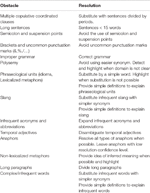
Table 1 Reading obstacles and resolutions.
Measures
Primary Effect: Comprehension Score
The written report participants undertook a reading comprehension examination under exam weather. Multiple option questions (MCQs) were generated by each clinical team for their respective texts, with the help of technical partners' input. MCQs were selected based on the original texts so that they could tap into the general comprehension of the text's content, especially parts of the text with identified obstacles. The MCQs were the same for both original and simplified texts, and an case of ii text versions followed past the MCQ is provided in Figure 1.
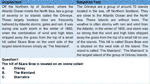
Figure 1 Example of two text versions followed by a multiple-choice question (MCQ).
Each adult text was followed by six MCQs, and each adolescents' texts had four MCQs. This selection was washed to adapt adolescents' functioning inside the same timeframe as the adults.
Each center created a library of 12 texts, half-dozen original and 6 modified (simplified) version of original texts, while the MCQs were the aforementioned for each corresponding text. The examination battery was comprised of iii original and 3 simplified texts randomly selected for each participant. Both adolescents and adult participants were given 10 min to read each text and answer all MCQs per text.
The primary effect was the comprehension score calculated by calculation the text scores for each question. Scores from the simplified texts were compared with scores from the original texts. Developed texts were followed by six questions each. Every correct respond was scored as one, and each wrong reply was scored as 0. Therefore, each text score could range from 0 (no correct answer) to 6 (all correct answers) for adults, and 0–4 for adolescents. The overall score for original and simplified texts was calculated separately by adding the score for each of the iii corresponding texts. The overall range of scoring values are 0–xviii for adults (half dozen questions × three texts) and 0–12 for adolescents (4 questions × 3 texts).
Secondary Event: Self-Reported Text Complexity
The secondary outcome was self-reported text complication that was measured on a Likert-blazon scale, where participants were asked to blindly rate how easy it was to empathise each text. The scores ranged from 1 (very easy) to 5 (very difficult). Therefore, the range of scores for each text was 1–v, and overall (for three texts) 3–fifteen. Higher subjective scores indicated self-reported higher level of comprehension difficulty, while lower scores indicated that the texts were easier to sympathize.
Data Analysis
Full general features. Descriptive statistics are presented as numbers and percentages for categorical variables and means with standard deviations for continuous data.
Primary analyses for primary and secondary outcomes. The primary analyses tested the effectiveness of the tool using repeated measures t-tests for primary and secondary outcomes. The consequence size using the Cohen's d was as well calculated (49).
Secondary analyses. Correlation analyses were performed to assess the association between original and simplified text scores and subjective rating to test if participants were able to place which text was original and which i was simplified. The scores of the MCQ tests were compared between the original and simplified versions of each text and betwixt the individuals. Paired t-tests for analyses of comparisons between the original and simplified texts and contained sample t-tests for comparisons between individuals were used. Finally, univariable and adapted regression analyses were performed to appraise the clan betwixt participants´ characteristics and simplified text scores.
All data were stored electronically and analyzed with SPSS.
Results
Full general Features
Nosotros invited 445 people to participate in the evaluation chore, 140 of whom were excluded because they did not run into inclusion criteria, declined to participate, or did not respond to our invitation. Three hundred five people consented to participate; 11 of them dropped out and did not carry out the reading test. The main reason for the drop out was poor wellness on the day of the test. Two hundred ninety-iv people completed the examination, and all their data were analyzed. For detailed information, see Figure 2.
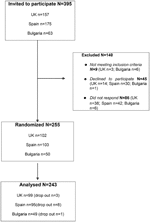
Figure 2 Participant flow diagram.
A total of 243 subjects (29%, female) participated in this written report. Overall age ranged from 12 to lxx years old [adolescents, mean = 14.0 years old (SD = ii.1); adults, hateful = 35.iii years old (SD = 13.1)]. The sample was predominantly male. Considering the moderately homogenic ethnic composition of Bulgaria and Spain, the sample was principally (93%) of white indigenous groundwork. Adult participants had higher IQ scores [109.25 ± 21.four (75–168)] than adolescent participants [85.97 ± 13.2 (70–127)] p < 0.001.
A prominent characteristic of our adult participants sample is that they were well educated with only 1 person educated to elementary level (see Tabular array 2). More than than half of the sample were educated to secondary school level (55.7%) followed past graduates (35.57%), and MSc and PhD holders (iv.03%, respectively). Withal, although adult participants are very well educated, high percentages are unemployed, single, and practise non live independently (see Table ii).
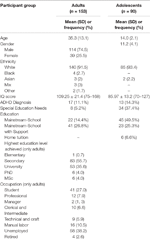
Table 2 Participants' characteristics.
Psychiatric comorbidities were prevalent in our adult sample, especially depression (25.5%) and feet (23.v%), but no psychiatric comorbidities were identified amongst adolescents.
Primary Analyses Results
Primary Outcome: Comprehension Score
The scores in Table 3 point the summary of the results of correct answers to the MCQs for the original and simplified texts. The scores ranged from 0 to 18 for adults' texts and 0–12 for adolescents' texts, with each score pregnant a right reply to a question related to text comprehension. The two sets of text scores were compared through related t-tests. All participants had a higher score on the simplified texts than on the original texts, meaning that overall both adults and adolescents gave more correct responses for simplified texts compared to original texts. This deviation was statistically significant in all groups, with the exception among adolescents in Bulgaria. When all participants were included in the analysis, departure in the scores for simplified texts (1000 = xi.2, SD = 4.ane) and original texts (M = 10, SD = 4.1) weather was statistically significant (p < 0.001, effect size = 0.three). Among different groups, the result sizes were of medium magnitude (d = 0.3–0.7). These findings were too consistent across age groups. Examining historic period groups separately, adults performed better on questions about simplified texts (M = 13.three, SD = 3.3) compared to original texts (Yard = 12, SD = 3.v; p < 0.001, Due north = 153). Adolescents also gave more right responses on questions about simplified content (M = 7.eight, SD = two.eight) compared to questions about original texts (Chiliad = half-dozen.6, SD = 2.half dozen; p < 0.001, N = 90).
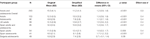
Table 3 Text score analysis.
Secondary Outcome: Self-Reported Text Complexity
A like set of analyses were performed for the participants' blind rating almost text complexity. Overall, all participants blindly rated simplified texts every bit easier to sympathise than the original texts. This divergence was statistically pregnant in all groups, with the exception amongst adolescents in Spain. When all participants were included in the analysis, the original text was considered more difficult to understand (M = 7.half dozen, SD = 2.4) than the simplified text (M = viii.vii, SD = 2.6; p < 0.001, N = 243). The findings were consistent for our subgroups of adults and adolescents. See Tabular array four.
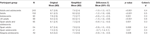
Tabular array 4 Analysis of subjective scoring.
Secondary Analyses Results
Association Between Text and Self-Reported Text Complexity Scores
The correlation coefficients and p values betwixt the original text and subjective scores was 0.03 (p = 0.56) and between the simplified text and subjective scores was 0.03 (p = 0.67).
Association Between Participants' Characteristics and Simplified Text Scores
The univariable and adjusted regression analyses betwixt participants' characteristics and simplified text scores are presented in Table 5. The majority of variables examined were associated with the simplified text scores in the univariable analyses. The exception was occupation and ADHD, which were not found to exist significant. Female participants scored higher than male person participants, with scores i.6 units college. Participants with college IQ values achieved college text scores on simplified texts. A 10-unit of measurement increase in IQ was associated with a 0.9-unit of measurement increase in text score. A college level of didactics was besides associated with higher upshot values. Those with university education had scores that were 6.six units higher, on average, than those with no or just elementary education. There was picayune difference in scores between married and divorced/widowed participants. However, single participants had the highest scores.
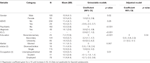
Table 5 Univariable and multivariable regression models.
In the multivariable analyses, the results suggested that higher education was significantly associated with the text scores.
Discussion
The study provides the first clinical evaluation of novel assistive engineering, Open Book, that aims to assist reading comprehension of written texts in adults and adolescents with ASD. While this is not a reading comprehension intervention per se, nosotros have institute that Open Book can assistance convert written texts into simpler forms, which are easier to understand by people with ASD. Open up Book tin be used either apart or with the online aid of a carer or teacher, which makes the tool adaptable to different ages and levels of comprehension. Open up Book is bachelor in English language, Spanish, and Bulgarian. It automatically simplifies written text by splitting long sentences; replacing metaphors, slangs, and idioms with commonly used synonyms; resolving anaphors, etc. It also has the option of replacing some complex words with pictures, which was specially used by adolescents and their teachers.
Open Book was evaluated by adults and adolescents in UK, Kingdom of spain, and Bulgaria. Significant piece of work went towards developing reading comprehension testing methodology and materials that were age specific and matched for the level of complexity across 3 languages.
The evaluation of Open Book indicates that developed and young people with ASD benefit from automatic text simplification. Participants in our study achieved significantly better tests' results when they processed simplified than original texts, which indicates that their understanding of the text content was enhanced when the written data was modified by the assistive technology.
The effect sizes were of medium magnitude overall, and for the adolescent sample in Spain, the upshot size was large. The subjective, blind ratings of self-reported text complexity indicated in all instances that simplified versions were deemed equally easier to cover compared to original texts.
Advanced education (university studies vs. lower didactics) was associated with higher text scores. We may hypothesize that reading skills improve with education, merely information technology may exist explained past having improve cognitive abilities. However, other findings support the idea that individuals with ASD keep to struggle with complex linguistic phenomena (x).
There are some limitations in this study. Fifty-fifty though Open Books seems to accept a positive affect in immediate reading comprehension of written texts, we are not able to decide if there is a longer-term effect in the reading abilities of our target group. Furthermore, nosotros could non evaluate the effect of the use of this assistive technology in the functionality of our participants and their quality of life. Although we take demonstrated the potential benefits for loftier-functioning individuals, the results may non exist generalizable to other people on the autistic spectrum.
Conclusions
The study indicates that assistive technologies could be useful in supporting understanding of written text for people with ASD. The written texts simplified past the Open Book platform were significantly easier to understand past both adults and adolescents with loftier operation ASD. This demonstrates a novel direction in translational autism research that opens the doors of interdisciplinary collaboration and innovation to do good people with this disabling condition.
The adjacent step would be to appraise the feasibility of Open Book, its uptake and utility by both people with ASD and their carers in real-life weather.
Ethics Argument
All study procedures were in accordance with the upstanding standards of the respective institutional and/or national enquiry committees and with the 1964 Helsinki declaration and its later amendments or comparable ethical standards. Total ethical approval for the project was sought and received from each centre separately. In the United kingdom of great britain and northern ireland full ethical approval was sought and received by East of Scotland Enquiry Ethics Service (ref: thirteen/ES/0059). Divide ethical approvals were also received by local Research and Development teams from each NHS site that participated in recruitment. In Bulgaria Parallel Earth received approval from the Upstanding Commission of Plovdiv University St. Paisii Hilendarski. Besides, for the control group, permissions were received from the Schoolhouse direction where the tests were conducted. Parallel Globe is a Registered Administrator of Personal Information co-ordinate to the Bulgarian Law for Protection of the Personal Data. In Spain consultations were conducted following internationally accustomed ethical regulations, the legal normative applicable and the Good Clinical Practice standards (CPMP/ICH/ 135/95). The guidelines of investigation compatible with those suggested by the American Psychological Association for investigations involving human participants were also followed.
Writer Contributions
AC-P, As and VJ designed and executed the study, assisted with the information analyses and wrote de newspaper. JG assisted with the data analyses and collaborated with the writing of the results and the whole paper.
Funding
The study was granted past the FP7 EU Grant for Social Inclusion. This written report was supported past the Fundamental and Northward West London NHS Foundation Trust, with assistance from M. Keats and A. Bela. The writing contribution of the writer JG was supported by Millennium Scientific discipline Initiative of the Ministry of Economy, Development and Tourism, grant "Millennium Nucleus to Ameliorate the Mental Health of Adolescents and Youths, Imhay."
Conflict of Interest Statement
The authors declare that the inquiry was conducted in the absenteeism of whatsoever commercial or financial relationships that could be construed as a potential conflict of interest.
Acknowledgments
We gratefully admit the contribution of all the partners of the FIRST study from Wolverhampton University (Prof. R. Mitkov, Dr. C. Orasan, and R. Evans); Deletrea Kingdom of spain (Sandra Freire Prudencio, Juan Martos, A. Gonzalez, and D. Gill); University of Jaen (Thou. T. Valdivia, Due east. M. Cámara, E. Barbu, and A. Ureña López); Academy of Alicante (P. Moreda and Due east. Lloret); iWeb Technologies Ltd; Kodar OOD, Bulgaria; Autism Europe (A. Baranger).
References
one. Elsabbagh M, Divan G, Koh YJ, Kim YS, Kauchali Southward, Marcín C, et al. Global prevalence of autism and other pervasive developmental disorders. Autism Res (2012) 5(3):160–79. doi: 10.1002/aur.239
PubMed Abstract | CrossRef Full Text | Google Scholar
2. Howlin P, Savage S, Moss P, Tempier A, Rutter Grand. Cerebral and language skills in adults with autism: a twoscore-yr follow-upward. J Child Psychol Psychiatry (2014) 55(ane):49–58. doi: 10.1111/jcpp.12115
PubMed Abstract | CrossRef Total Text | Google Scholar
3. Minshew NJ, Goldstein K, Siegel DJ. Neuropsychologic functioning in autism: contour of a complex information processing disorder. J Int Neuropsychol Soc (1997) 3(four):303–sixteen.
PubMed Abstract | Google Scholar
5. Nation One thousand, Clarke P, Wright B, Williams C. Patterns of reading ability in children with autism spectrum disorder. J Autism Dev Disord (2006) 36(vii):911–nine. doi: 10.1007/s10803-006-0130-one
PubMed Abstract | CrossRef Full Text | Google Scholar
vi. O'Connor IM, Klein PD. Exploration of strategies for facilitating the reading comprehension of high-functioning students with autism spectrum disorders. J Autism Dev Disord (2004) 34(ii):115–27. doi: ten.1023/B:JADD.0000022603.44077.6b
PubMed Abstract | CrossRef Full Text | Google Scholar
7. Frith U, Snowling Grand. Reading for significant and reading for audio in autistic and dyslexic children. Br J Dev Psychol (1983) 1(4):329–42. doi: 10.1111/j.2044-835X.1983.tb00906.x
CrossRef Full Text | Google Scholar
8. Smith Myles B, Hilgenfeld TD, Barnhill GP, Griswold DE, Hagiwara T, Simpson RL. Analysis of Reading Skills in Individuals with Asperger Syndrome. Focus Autism Other Dev Disabl (2002) 17(i):44–7. doi: 10.1177/108835760201700104
CrossRef Full Text | Google Scholar
9. Miniscalco C, Dahlgren Sandberg A. Basic reading skills in Swedish children with tardily developing linguistic communication and with or without autism spectrum disorder or ADHD. Res Dev Disabil (2010) 31(5):1054–61. doi: 10.1016/j.ridd.2010.04.004
PubMed Abstract | CrossRef Full Text | Google Scholar
11. Walters KA. Improving reading comprehension and social skills in children with high operation autism: an elementary school intervention. Sacramento: California State University (2011).
Google Scholar
13. Cox D. Oral reading operation and the synergy of fluency, comprehension, and motivation: a instance written report of a 6th class grade. Texas: Texas Tech University (2007).
Google Scholar
14. Businesswoman-Cohen South, Wheelwright South, Loma J, Raste Y, Plumb I. The "Reading the Mind in the Eyes" Test revised version: a study with normal adults, and adults with Asperger syndrome or loftier-functioning autism. J Child Psychol Psychiatry (2001) 42(two):241–51. doi: 10.1017/S0021963001006643
PubMed Abstract | CrossRef Full Text | Google Scholar
17. Jolliffe T, Baron-Cohen South. Linguistic processing in high-operation adults with autism or Asperger's syndrome. Is global coherence dumb? Psychol Med (2000) 30(5):1169–87. doi: 10.1017/S003329179900241X
PubMed Abstract | CrossRef Total Text | Google Scholar
eighteen. Beversdorf DQ, Anderson JM, Manning SE, Anderson SL, Nordgren RE, Felopulos GJ, et al. The upshot of semantic and emotional context on written recollect for verbal language in high functioning adults with autism spectrum disorder. J Neurol Neurosurg Psychiatry (1998) 65(five):685–92. doi: 10.1136/jnnp.65.five.685
PubMed Abstract | CrossRef Total Text | Google Scholar
19. Randi J, Newman T, Grigorenko EL. Pedagogy children with autism to read for significant: challenges and possibilities. J Autism Dev Disord (2010) 40(seven):890–902. doi: 10.1007/s10803-010-0938-half dozen
PubMed Abstract | CrossRef Full Text | Google Scholar
20. Ricketts J, Jones CRG, Happé F, Charman T. Reading comprehension in autism spectrum disorders: the function of oral language and social operation. J Autism Dev Disord (2013) 43(iv):807–sixteen. doi: 10.1007/s10803-012-1619-4
PubMed Abstract | CrossRef Full Text | Google Scholar
21. McIntyre NS, Solari EJ, Gonzales JE, Solomon M, Lerro LE, Novotny S, et al. The scope and nature of reading comprehension impairments in schoolhouse-aged children with higher-functioning autism spectrum disorder. J Autism Dev Disord (2017) 47(9):2838–60. doi: ten.1007/s10803-017-3209-y
PubMed Abstract | CrossRef Full Text | Google Scholar
22. McIntyre NS, Solari EJ, Grimm RP, Lerro L, Gonzales J, Mundy PC. A comprehensive exam of reading heterogeneity in students with high performance autism: singled-out reading profiles and their relation to autism symptom severity. J Autism Dev Disord (2017) 47(4):1086–101. doi: 10.1007/s10803-017-3029-0
PubMed Abstract | CrossRef Full Text | Google Scholar
23. El Zein F, Solis One thousand, Vaughn S, McCulley L. Reading comprehension interventions for students with autism spectrum disorders: a synthesis of enquiry. J Autism Dev Disord (2014) 44(6):1303–22. doi: 10.1007/s10803-013-1989-two
PubMed Abstract | CrossRef Full Text | Google Scholar
24. Åsberg J, Kopp Southward, Berg-Kelly K, Gillberg C. Reading comprehension, discussion decoding and spelling in girls with autism spectrum disorders (ASD) or attention-arrears/hyperactivity disorder (AD/HD): operation and predictors. Int J Lang Commun Disord (2010) 45(1):61–71. doi: x.3109/13682820902745438
PubMed Abstract | CrossRef Full Text | Google Scholar
25. Wahlberg T, Magliano JP. The ability of high part individuals with autism to comprehend written discourse. Discourse Process (2004) 38(one):119–44. doi: 10.1207/s15326950dp3801_5
CrossRef Full Text | Google Scholar
26. Whalon Grand, Hanline MF. Furnishings of a reciprocal questioning intervention on the question generation and responding of children with autism spectrum disorder. Educ Train Dev Disabil (2008) 43(3):367–87.
Google Scholar
27. Van Riper I. The Effects of the Directed Reading-thinking Activity on Reading Comprehension Skills of Middle Schoolhouse Students with Autism. Widener D, editor. Chester, PA: Widener University (2010).
Google Scholar
28. Ganz JB, Flores MM. The effectiveness of directly education for instruction linguistic communication to children with autism spectrum disorders: identifying materials. J Autism Dev Disord (2009) 39(i):75–83. doi: ten.1007/s10803-008-0602-half-dozen
PubMed Abstract | CrossRef Full Text | Google Scholar
29. Flores MM, Ganz JB. Effectiveness of straight instruction for education statement inference, use of facts, and analogies to students with developmental disabilities and reading delays. Focus Autism Other Dev Disabl (2007) 22(4):244–51. doi: 10.1177/10883576070220040601
CrossRef Full Text | Google Scholar
30. Knight VF. Effects of supported electronic text and explicit education on scientific discipline comprehension by students with autism spectrum disorder. Charlotte, NC: The Academy of Due north Carolina at Charlotte (2010).
Google Scholar
31. Campbell MA. Effects of pronoun identification educational activity on text comprehension for children with autism. Teaneck, NJ: Fairleigh Dickinson University (2010).
Google Scholar
32. Solis M, Ciullo S, Vaughn S, Pyle N, Hassaram B, Leroux A. Reading comprehension interventions for middle school students with learning disabilities. J Learn Disabil (2012) 45(4):327–40. doi: 10.1177/0022219411402691
PubMed Abstract | CrossRef Full Text | Google Scholar
33. Edmonds MS, Vaughn S, Wexler J, Reutebuch C, Cablevision A, Tackett KK, et al. A synthesis of reading interventions and effects on reading comprehension outcomes for older struggling readers. Rev Educ Res (2009) 79(1):262–300. doi: 10.3102/0034654308325998
PubMed Abstract | CrossRef Full Text | Google Scholar
34. National Reading Console (US). International Reading Association. Evidence-based reading instruction: putting the National Reading Console study into do. Newwark, NJ: International Reading Clan (2002).
Google Scholar
35. Edyburn DL. 2003 in review: a synthesis of the special education engineering science literature. J Spec Educ Technol (2004) 19(4):57–80. doi: 10.1177/016264340401900407
CrossRef Full Text | Google Scholar
36. Edyburn DL. Applied science-enhanced reading performance: defining a research agenda. Read Res Q (2007) 42(1):146–52. doi: 10.1598/RRQ.42.i.7
CrossRef Full Text | Google Scholar
37. Knight V, McKissick BR, Saunders A. A review of technology-based interventions to teach academic skills to students with autism spectrum disorder. J Autism Dev Disord (2013) 43(11):2628–48. doi: 10.1007/s10803-013-1814-y
PubMed Abstruse | CrossRef Total Text | Google Scholar
38. Colby KM. The rationale for computer-based treatment of language difficulties in nonspeaking autistic children. J Autism Child Schizophr (1973) 3(3):254–60. doi: ten.1007/BF01538283
PubMed Abstract | CrossRef Full Text | Google Scholar
39. Knight VF, Sartini E. A comprehensive literature review of comprehension strategies in core content areas for students with autism spectrum disorder. J Autism Dev Disord (2015) 45(5):1213–29. doi: 10.1007/s10803-014-2280-10
PubMed Abstract | CrossRef Full Text | Google Scholar
40. Gonzalez-Navarro A, Freire-Prudencio Due south, Gil D, Martos-Perez J, Jordanova V, Cerga-Pashoja A, et al. Outset: a tool for facilitating reading comprehension in high-functioning autism spectrum disorder. Rev Neurol (2014) 58 Suppl one:S129–35. doi: x.33588/rn.58S01.2014003
CrossRef Full Text | Google Scholar
41. Martín Valdivia MT, Martínez Cámara E, Barbu E, Ureña López LA, Moreda P, Lloret E. Proyecto FIRST (Flexible Interactive Reading Support Tool): desarrollo de una herramienta para ayudar a personas con autismo mediante la simplificación de textos. Procesamiento del Lenguaje Natural (2014) 53:143–half-dozen.
Google Scholar
42. Cerga-Pashoja A, Jordanova V. Protocol of improving reading comprehension for adults and children with autistic spectrum disorders through a computer supported intervention in a crossover study. BAOJ Psychol (2016) 1:003. doi: 10.24947/baojp/1/2/00103
CrossRef Full Text | Google Scholar
43. Perfetti C, Yang C-Fifty, Schmalhofer F. Comprehension skill and word-to-text integration processes. Appl Cognit Psychol (2008) 22(three):303–18. doi: 10.1002/acp.1419
CrossRef Total Text | Google Scholar
44. Yang CL, Perfetti CA, Schmalhofer F. Event-related potential indicators of text integration across sentence boundaries. J Exp Psychol Acquire Mem Cogn (2007) 33(1):55–89. doi: 10.1037/0278-7393.33.1.55
PubMed Abstract | CrossRef Full Text | Google Scholar
45. Perfetti C, Stafura J. Word knowledge in a theory of reading comprehension. Sci Stud Read (2014) 18(i):22–37. doi: 10.1080/10888438.2013.827687
CrossRef Full Text | Google Scholar
47. Elbourne DR, Altman DG, Higgins JP, Curtin F, Worthington HV, Vail A. Meta-analyses involving cross-over trials: methodological problems. Int J Epidemiol (2002) 31(ane):140–9. doi: 10.1093/ije/31.1.140
PubMed Abstract | CrossRef Full Text | Google Scholar
48. Maclure M. The case-crossover pattern: a method for studying transient effects on the chance of acute events. Am J Epidemiol (1991) 133(2):144–53. doi: 10.1093/oxfordjournals.aje.a115853
PubMed Abstract | CrossRef Full Text | Google Scholar
49. Cohen J. Statistical power assay for the behavioral sciencies. London, U.k.: Routledge (1977).
Google Scholar
Source: https://www.frontiersin.org/articles/10.3389/fpsyt.2019.00546/full
0 Response to "Can Kids With Autism Have Trouble Reading"
Postar um comentário